

Arizona Voters Demand More Mental Health Resources — Call Crisis Care Underfunded
76% Say Services Underfunded; Bipartisan Support for Crisis Care, School Counseling, and Primary Care Integration
PHOENIX (May 22nd, 2025) – An overwhelming majority of Arizona voters believe mental health services in the state are underfunded, with 76% saying the system receives insufficient resources — including 42% who call the underfunding "significant," according to a new AZPOP survey from OH Predictive Insights.
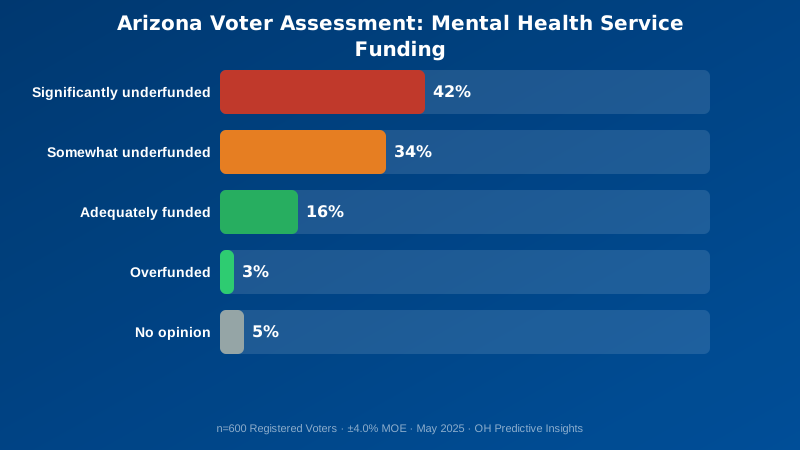
Arizona has historically ranked among the worst states nationally for mental health care access, a distinction driven by severe shortages of psychiatrists and therapists, inadequate crisis stabilization capacity, and high rates of uninsured residents who cannot access care. The COVID-19 pandemic significantly worsened the state's mental health landscape, with rates of depression, anxiety, and substance abuse all increasing substantially.
The 76% underfunding assessment is notably bipartisan: Republicans (70%), Independents (77%), and Democrats (83%) all agree the system is underfunded. This bipartisan consensus reflects personal experience — 67% of Arizona voters say they or a family member have needed mental health services at some point, and many report difficulty accessing timely or affordable care.
"Mental health care is one of those issues where the lived experience is so broadly shared that it transcends partisan lines," says OHPI Chief of Research Mike Noble. "When two-thirds of voters have personally encountered the inadequacy of the mental health system, political divisions become secondary."
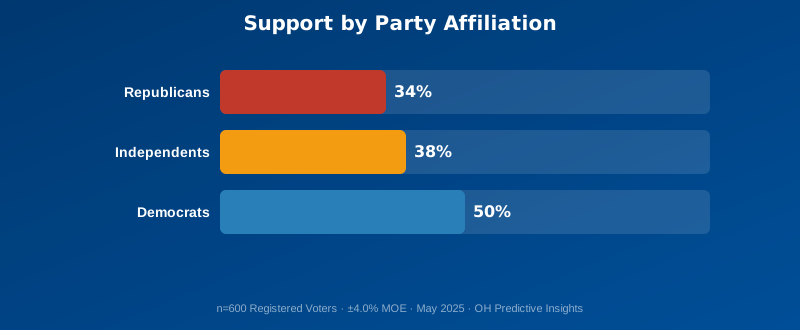
On specific policy solutions, the survey finds strong bipartisan support across the board. Mobile crisis response teams (sending mental health professionals rather than police to nonviolent mental health calls) draw 79% support. Requiring insurance companies to cover mental health services at parity with physical health coverage gets 82% support. Expanding school counselor ratios in K-12 schools earns 78% support. Integrating mental health screening into primary care visits draws 74% support.
The cost argument resonates strongly with fiscal conservatives: the survey presented data showing that unaddressed mental health crises cost Arizona approximately $4.2 billion annually in emergency room visits, incarceration, lost productivity, and homelessness services. Sixty-eight percent of Republican voters say this economic argument makes them more supportive of mental health investment.
Methodology: AZPOP conducted May 17–19, 2025. n=600 Arizona Registered Voters. ±4.0% MOE.
Charts & Images
Related Articles

POLL: Healthcare Costs Emerge as Top Concern for Arizona Voters Heading Into 2026
For the first time since 2020, healthcare costs have risen to become the single top policy concern for Arizona voters, w…

POLL: Arizona Voters Demand Stronger Action on Fentanyl Crisis — Support Trafficking Penalties and Treatment
A new AZPOP survey finds 84% of Arizona voters consider fentanyl and opioid addiction a serious problem in their communi…

POLL: Arizona's Marijuana Legalization at 5 Years — Voters Overwhelmingly Say It Was the Right Call
Five years after legalizing recreational marijuana, 68% of Arizona voters say Proposition 207 was the right decision for…

POLL: 74% of Arizona Voters Support Expanding Solar Energy Investment
A new AZPOP survey finds 74% of Arizona voters support expanding state investment in solar energy, making it one of the …